


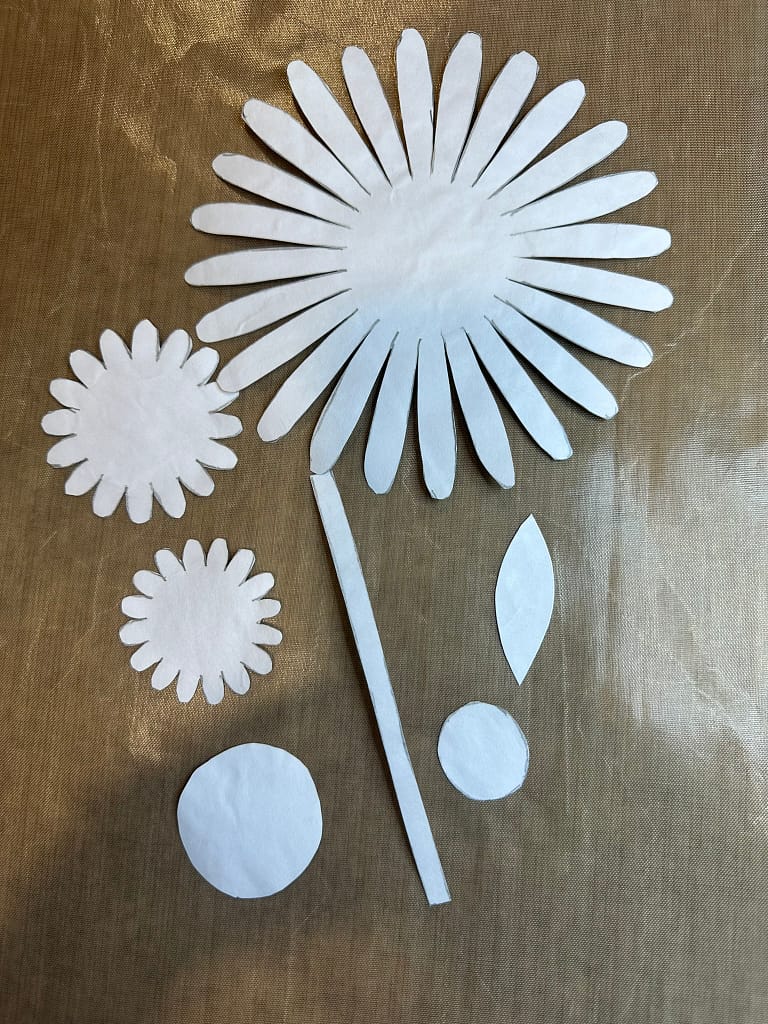
Have you ever seen an appliqué pattern you just can’t wait to make?
I’m talking drop-everything, start-cutting-right-now excitement — not just another addition to the “one day” collection.
And then…you realize it’s written in the wrong format for how you like to work?
Yeah. Been there. Yet another PIG (Project in Grocery Bag). 🛍️
Let’s clear the threads on what I mean by “format.”
There are three main types of appliqué in quilting. (Sure, there are more — but we’re talking big bins here.)
- Needle Turn Appliqué – the traditional and original method.
- Machine Appliqué (Finished Edge) – a slightly quicker and less painful method.
- Raw Edge Fusible Appliqué – the quickest, easiest, and my personal favorite.
Each one has its quirks, its fans, and its “nope” moments.
The good news? You can convert a pattern from one style to another with just a little know-how — and a dash of seam-allowance smarts.
Let’s dig into what makes each technique tick—and how to tweak them to suit your stitching style.
🪡 Needle Turn Appliqué
This is hand-stitching at its most classic.
You trace the final shape onto your fabric using a removable marker (chalk, air erase, hera marker — whatever works best for you).
Then, you cut about ¼” outside the line, adding a seam allowance. You fold that seam allowance under, using the drawn line as your guide, and hand-stitch that folded edge to the background fabric.
It’s slow, meditative, and perfect for evening stitching while binge-watching the Hallmark Channel. 🎬🧵
🧵 Machine Appliqué – Finished Edge
Not everyone has the patience for needle turn, but they still want those crisp, clean edges.
Finished-edge machine appliqué is the best of both worlds — neat and much quicker.
You’ll often get two lines on your pattern template:
- The final shape, and
- The outer cut line (which includes the ¼” seam allowance).
You press that seam allowance under, using the inner line as your guide, and stitch the piece down by machine. Use a straight stitch or a decorative one — your machine probably has a few it’s just dying to show off. 😉
Pro tip: A cardstock template or heat-resistant appliqué sheet can help you shape those edges so they are truly show-worthy.
🔥 Raw Edge Fusible Appliqué
Fast, fabulous, and just a little rebellious — raw edge fusible appliqué is perfect for impatient quilters like me. 🏎️💨
It’s all about getting those shapes cut and pressed into place — no seam allowance needed.
You adhere fusible web to the back of the fabric, trace the finished shape onto the front, cut it out, and press it onto your background.
Use a straight stitch ⅛” from the edge if you want a rustic, frayed look.
Otherwise, secure the edges with a tight stitch that catches the fabric — satin stitch, blanket stitch, or a little decorative magic.
✂️ Curves, Corners, and Seam Allowance Smarts
Here’s your quick cheat sheet for switching formats:
- Needle Turn and Raw Edge Fusible typically have one line for the finished shape.
➔ To convert it for finished-edge machine appliqué, add a ¼” seam allowance. - Finished-Edge Machine Appliqué usually has two lines (finished and cut lines).
➔ To use it for needle turn or fusible, remove the seam allowance and just use the finished shape.
✨ Quick Stitch Tips:
- Convex Curves (curve out): Snip into the seam allowance every ¼”–1″ to help the fabric flex smoothly.
- Concave Curves (curve in): Snip small wedges to reduce bulk and avoid puckering.
- Corners: Trim the tip to get clean, crisp points.
🧷 Needle Notes
Here’s a quick reference chart to pin up in your sewing space — because who has time to scroll when your iron’s already hot? 🔥
| Method | Add Seam Allowance? | Stitch Style | Notes |
|---|---|---|---|
| Needle Turn | ✅ Yes | Hand stitched | Fold under and stitch to background |
| Machine Finished Edge | ✅ Yes | Machine stitch (straight or decorative) | Use a template to press edges under |
| Raw Edge Fusible | ❌ No | Machine stitch (to secure edge) | Fastest method, needs edge finishing to prevent fray |
🧵 Final Thoughts
Your favorite appliqué pattern doesn’t need to sit forever in the NESTY pile (Not Even Started Yet) just because it’s written in the “wrong” format.
Whether you’re a fuser, a folder, a turner — or like to mix it up — it’s totally possible to adapt a pattern to your stitching style.
All it takes is a little seam allowance math and a stitchy sense of adventure. ✨
Have you ever converted an appliqué pattern?
Drop a comment or tag me on Instagram — I’d love to see your spin on things!